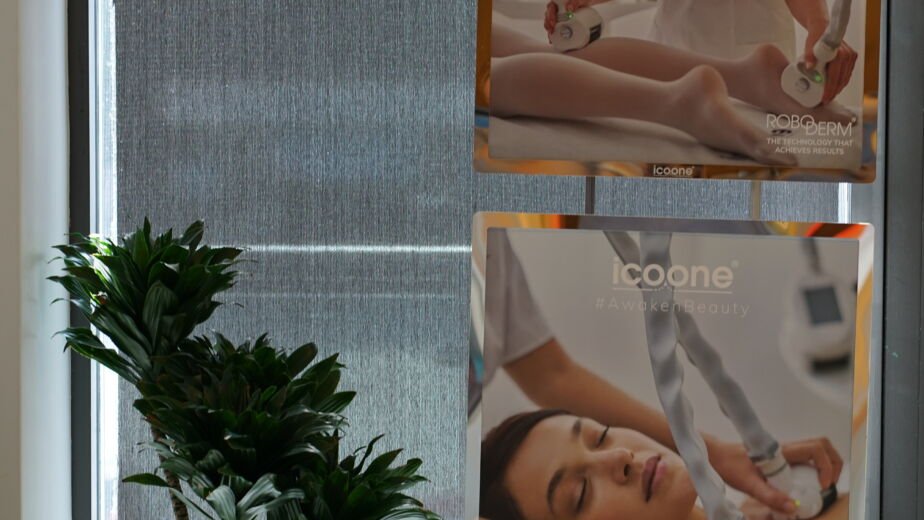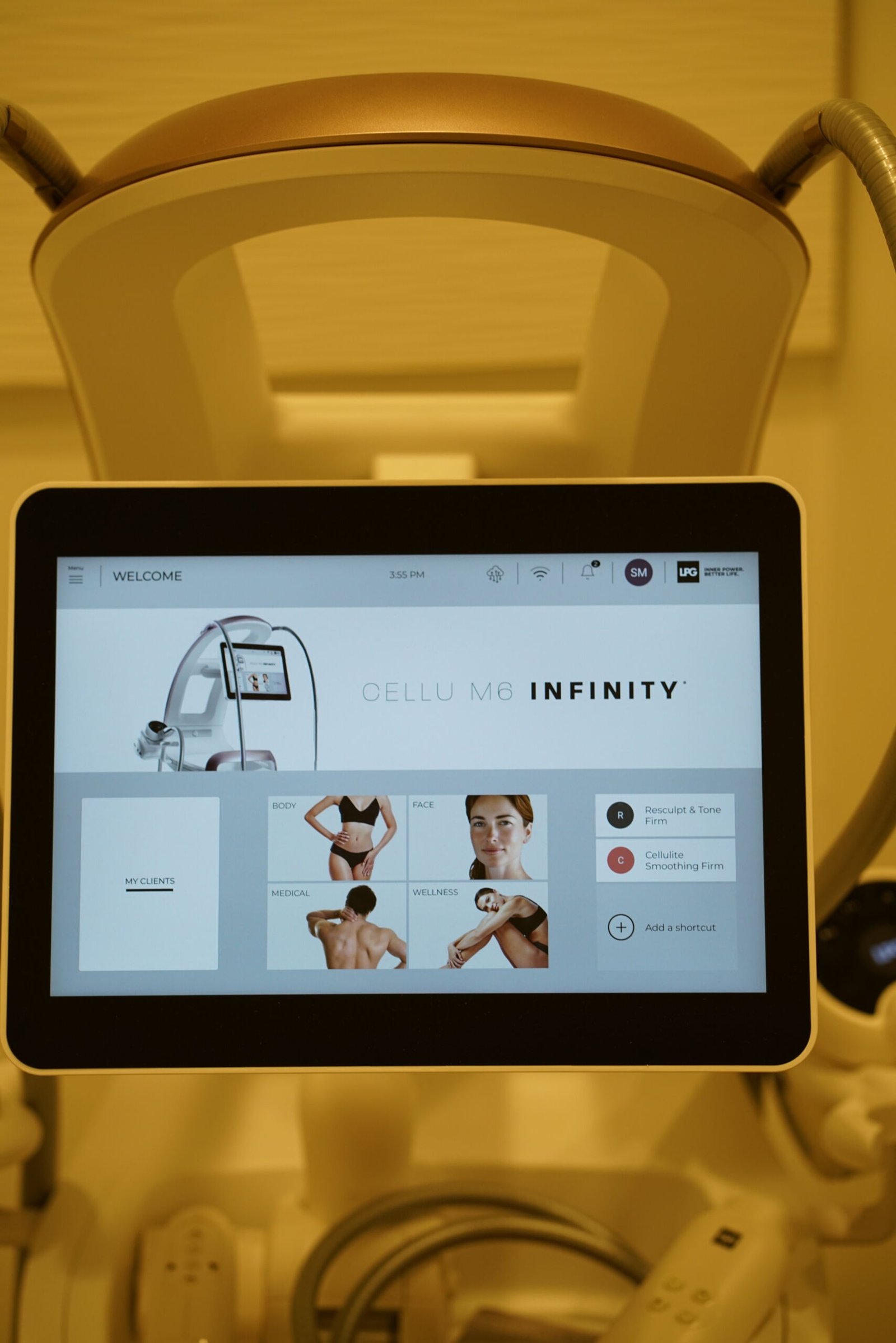
Endermologie is the treatment our clients ask about most, and also the one that takes longest to explain, because it does not fit the categories people expect. It is not a massage, though it feels a little like one. It is not a laser, and it is not heat or cold based. Nothing is injected, nothing is cut, and there is no downtime. What it does is more interesting than any shortcut: it speaks to your skin and connective tissue in the one language those tissues respond to reliably, which is mechanical force.
What Endermologie Actually Is
Endermologie is a patented technique developed by LPG, a French company that has been refining mechanical stimulation technology since the 1980s. Treatment is delivered through a handpiece containing motorized rollers and a calibrated suction chamber. As your therapist guides the head across the body, tissue is lifted into the chamber and then rolled, folded, and released in a controlled rhythm. The suction is nothing like the aggressive vacuum people sometimes picture: it runs in precise, machine-controlled sequences, with intensity adjusted to your comfort and to the area being worked.
The technique came out of scar and burn rehabilitation, where practitioners mobilizing fibrotic scar tissue kept noticing something they were not aiming for: the skin around the treated area looked smoother and felt more supple. That observation is what turned a rehabilitation tool into an aesthetic one. LPG devices are now FDA-cleared for the temporary reduction in the appearance of cellulite and for temporarily increasing local blood circulation, and the technology is used in medical, sports recovery, and aesthetic settings worldwide.
The Science: Mechanotransduction
The word worth knowing here is mechanotransduction. It describes how a cell converts a physical force into a biological response. Cells are not passive passengers; they constantly read the mechanical environment around them and adjust their behavior accordingly. Stretch a fibroblast, the cell responsible for producing collagen and elastin, and it changes what it does. Compress it, release it, then stretch it again in a rhythmic pattern, and the response differs from what a single sustained pull would produce.
That is the whole premise of Endermologie. The roller and suction sequence delivers a repeatable, specific mechanical signal to the skin, the adipose layer beneath it, and the connective tissue that runs between them. Research on the LPG technique has looked at fibroblast activity, at how adipose tissue responds to rhythmic mechanical stimulation, and at local circulation and lymphatic flow. The practical translation is this: rather than destroying tissue or forcing a result, the treatment gives tissue a reason to behave differently, then repeats that signal often enough for the change to take hold.
It matters, too, that all of this happens without breaking the skin barrier. There is no thermal injury to recover from and no wound-healing cascade to manage.
How a Session Feels
You change into a breathable full-body suit that we provide. It keeps the treatment hygienic and lets the handpiece glide smoothly instead of dragging on skin. You lie on a treatment table while your therapist works through the areas on your plan, generally following the direction of lymphatic flow, and a full body session runs about 35 minutes.
Most people describe the sensation as a deep, rhythmic kneading, similar to a firm massage but more even and more consistent than a hand can produce. It should not hurt. If a setting feels too intense, say so, because intensity is adjustable in the moment and the goal is stimulation, not endurance. Afterward it is common to feel warm and pleasantly heavy, the way you might after a good massage, and equally common to need the bathroom sooner than usual. That is the circulatory and lymphatic side of the work doing its job, and why we ask you to drink water on your way out.
What Clients Notice
Endermologie is not a single-purpose device, part of why it has stayed our signature modality across all three studios. Depending on the protocol, the areas treated, and how consistently someone comes in, clients often report:
- Smoother skin texture and a softer appearance of dimpling on the thighs, hips, and glutes
- Clothes that fit more comfortably through the waist, hips, and thighs
- A lighter, less puffy feeling in the legs and ankles, particularly for people who retain fluid or sit all day
- Firmer, more resilient skin quality, including on areas that have lost tone after weight change or pregnancy
- Quicker recovery and less muscle heaviness after hard training weeks
The same principle applies above the neck. Our facial Endermologie protocols use a much finer handpiece to work on the delicate tissue of the face and neck, where the focus shifts toward drainage, definition along the jawline, and overall skin quality. If your interest is contour, circulation, and skin tone on the body, our body Endermologie page walks through how we structure those sessions.
Who It Is For
Cellulite is not a weight problem, which is worth saying plainly. It is a structural feature of how connective tissue, fat, and skin are organized, and it shows up in very lean bodies and very fit ones. That is why Endermologie appeals to such a wide range of clients: people addressing cellulite regardless of their size, clients in a post-pregnancy season, athletes managing recovery, anyone whose lymphatic system feels sluggish from travel or desk work, and people who want a genuinely non-invasive alternative to more aggressive procedures.
It is not right for everyone. Pregnancy, active infection, a history of blood clots, certain skin conditions, and recent surgery without physician clearance are reasons to wait or skip it. We screen for these at consultation, and if Endermologie is not a fit, we will say so and point you toward something that is.
Cadence: What to Realistically Expect
This is a cumulative treatment, and being honest about that matters more to us than making a dramatic promise. One session feels good and often leaves you looking a little less puffy, but it is not where the meaningful change lives. Most clients start with a series of ten to fifteen sessions, twice a week at first so the mechanical signal lands often enough to build on itself. Many notice a difference in how their skin feels within the first few sessions, with visible textural change more often around sessions six through ten.
After a series, most clients move to maintenance every two to four weeks. Connective tissue responds to consistency rather than intensity, and clients who pair sessions with hydration and movement tend to hold results longest. That is why we often build Endermologie into a plan alongside lymphatic drainage or compression therapy rather than treating it as a standalone.
Coming In
The best way to understand Endermologie is to feel it. A consultation lets us map your goals, review your history, and recommend a cadence that fits your schedule. If you are ready to see what mechanical stimulation can do for your skin and circulation, book a session at our West Hollywood, Manhattan Beach, or Newport Beach studio and we will take it from there.
Results vary from person to person, and this article is intended as general wellness information rather than medical advice.