Cellulite is one of the most searched and least accurately explained topics in the beauty industry. It gets blamed on toxins, on diet, on not working out enough. None of that holds up. Cellulite is a structural feature of how skin, connective tissue, and fat are arranged, and by most estimates 80 to 90 percent of adult women have it to some degree, including lean women and athletes.
So the useful question is not how to get rid of it, but what is actually happening under the skin and which approaches can meaningfully change how it looks.
What cellulite actually is
Beneath the skin sits a layer of subcutaneous fat organized into compartments, separated by fibrous bands of connective tissue called septae that anchor the skin down to the deeper fascia. A helpful picture is a tufted mattress: the fat is the padding, and the septae are the stitching that holds the surface down at fixed points.
When fat cells within a compartment expand, or when the septae stiffen and shorten over time, the padding pushes upward between the anchor points while the anchors stay where they are. What you see on the surface is the familiar pattern of soft bulges separated by small depressions.
Several other factors change how visible that pattern is:
- Skin thickness and collagen quality. Thinner skin conceals less of what sits underneath, which is why cellulite often becomes more noticeable after age 35 even without weight change.
- Septae orientation. The direction these bands run largely determines whether fat bulges through or gets held flat.
- Fluid in the tissue. Interstitial fluid and sluggish lymphatic drainage swell the compartments and exaggerate the surface contrast.
- Hormonal influence. Estrogen affects both fat distribution and connective tissue behavior, which is why cellulite frequently appears or shifts during puberty, pregnancy, and perimenopause.
Why it affects women far more than men
In women, the septae tend to run perpendicular to the skin surface, forming vertical columns with open space between them for fat to push through. In men, the same bands more often run in a crisscross diagonal lattice that distributes pressure and keeps the surface smooth. Men also carry thicker dermal tissue in the thighs and buttocks. This is anatomy, set by genetics and hormones rather than by discipline.
Why creams and quick fixes disappoint
Topical products face a basic geometry problem. The septae sit several millimeters below the skin surface, well past where a cream acts. Caffeine, the most common active ingredient in cellulite creams, temporarily draws water out of superficial tissue and can create a firmer look for a few hours. Retinoids may modestly improve dermal thickness with consistent use over many months, which slightly improves how well skin masks the layer beneath. Neither one touches the anchoring bands.
Weight loss is a more complicated case. Shrinking fat lobules can reduce how far tissue bulges, and some people do see improvement. Others find dimpling more apparent after significant loss, because skin laxity increases while the septae remain exactly as tethered as before. Strength training builds smoother underlying contour, but it does not release connective tissue. Body wraps, dry brushing, and detox protocols produce short-lived fluid shifts that reverse within a day.
It is worth saying plainly: no treatment currently available permanently eliminates cellulite. Anything marketed that way is overpromising.
What mechanical stimulation approaches actually do
The more credible category of cellulite treatments works mechanically rather than chemically. Instead of trying to reach the tissue through the skin barrier, these devices physically mobilize the subcutaneous layer using suction, rolling, and vibration. The goals are to make stiff connective tissue more pliable, stimulate fibroblast activity in the dermis, and move fluid out of congested areas.
Endermologie
Endermologie uses a treatment head with motorized rollers and gentle mechanical suction that lifts and folds a fold of tissue as it moves across the body. It is one of the longest-studied approaches in this category and holds FDA clearance for the temporary reduction in the appearance of cellulite. Sessions are non-invasive and usually described as a deep, firm massage.
Endospheres
Endospheres uses compressive microvibration, delivered through a roller head of rotating silicone spheres that vibrate at a low frequency while kneading the tissue. The design targets microcirculation and lymphatic movement alongside the mechanical work on the connective tissue itself, which is why many people notice a reduction in heaviness and puffiness before they notice a texture change.
Icoone
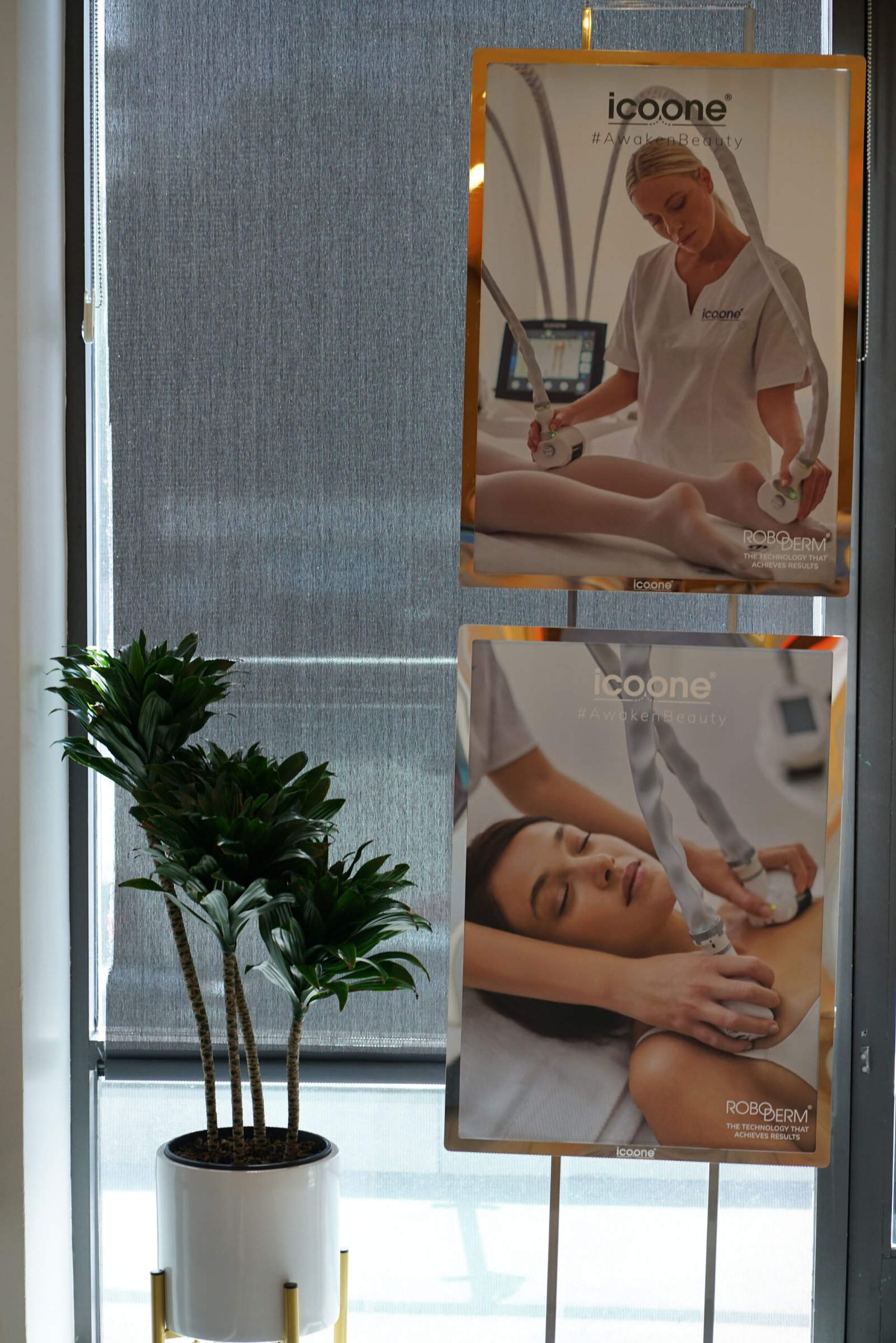
Icoone uses multi-micro-stimulation, applying many small independent suction points at once instead of one larger one, with the intent of acting on tissue at a finer scale.
What all three share matters more than what separates them. None of them dissolve fat, and none of them cut or release septae. They apply repeated, controlled mechanical stress to connective tissue and encourage fluid to move. The reasonable expectation is smoother texture, less swelling, and better skin quality in the treated area.
Why circulation and lymphatic flow matter here
Fluid is the part of cellulite most people underestimate. Long hours sitting or standing, high sodium intake, hormonal fluctuation, and low activity all contribute to fluid pooling in the thighs and hips. That fluid swells the fat compartments and deepens the contrast between bulges and tethered points, making dimpling look worse than the underlying structure alone would produce.
The lymphatic system has no central pump. It depends on muscle contraction, movement, and external compression to move fluid along. That is why rhythmic mechanical treatment produces a visible short-term change, and also why walking, hydration, and regular movement between appointments genuinely affect what you see in the mirror.
Consistency is the variable that decides the outcome
A single session mostly produces a fluid effect that fades within a couple of days. Real protocols run as a series, commonly 10 to 20 sessions scheduled one or two times per week, followed by monthly maintenance. Connective tissue remodels slowly, on a timeline closer to physical therapy or strength training than to a facial.
Most people who conclude these treatments do not work stopped after three or four sessions, before the mechanism had time to do anything. If you are not prepared to commit to a full series and some maintenance afterward, the honest advice is to spend the money elsewhere.
What a realistic result looks like
Improvement in appearance, not erasure. Expect softer shadowing under overhead lighting, smoother texture, reduced puffiness, and often a better fit in fitted clothing. Mild to moderate dimpling that shows mainly when standing or pinching responds better than deep, sharply tethered single dimples, which are held by particularly strong bands and generally call for a different medical approach.
Results are also maintained rather than banked. Tissue drifts back toward baseline over months if treatment and activity stop, in the same way fitness fades. That is not a flaw in the technology, it is the nature of working with living connective tissue.
If you want a candid assessment of what your specific pattern of cellulite is likely to respond to, and which of these approaches fits your body and your schedule, book a consultation at our West Hollywood, Manhattan Beach, or Newport Beach studio.
Individual results vary. This article is for general education and is not medical advice.